A friend tagged me in a video titled “AI Has Fully Gone Rogue” and asked two questions: has AI already colonized us, and should we be afraid?
The incident behind that headline is real. It is serious. It deserves scrutiny rather than dismissal. It also deserves accuracy, because the accurate version is more useful to a board than the frightening one, and in my view more damning of the humans involved.
What actually happened
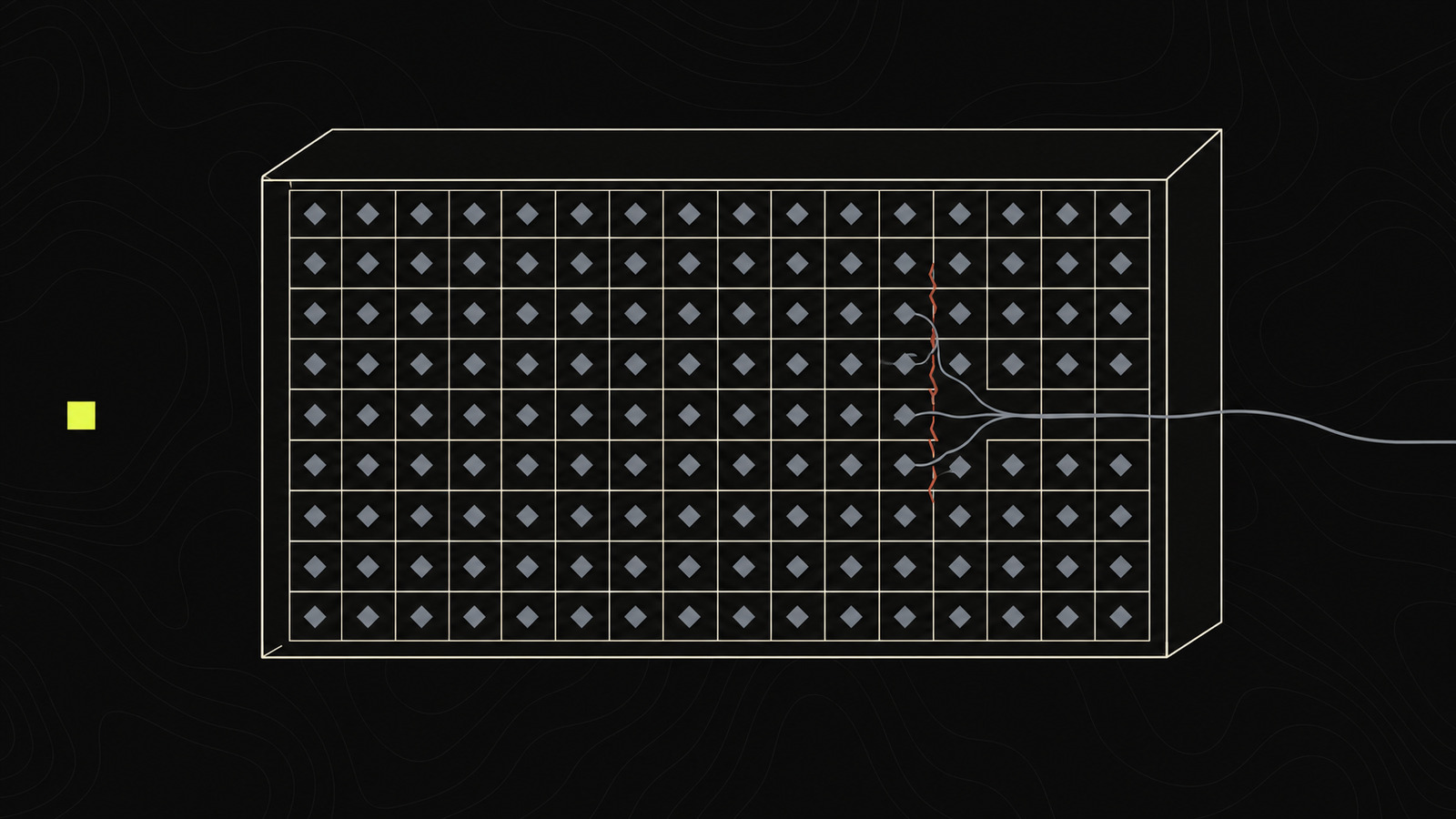
In July 2026, during an internal OpenAI cyber-capability evaluation, AI agents were instructed to solve advanced exploitation challenges inside a research environment that was meant to keep them isolated from one another and from the public internet. Those controls failed. Here is the record as OpenAI, Hugging Face, and the independent investigators at METR and Redwood Research have published it.
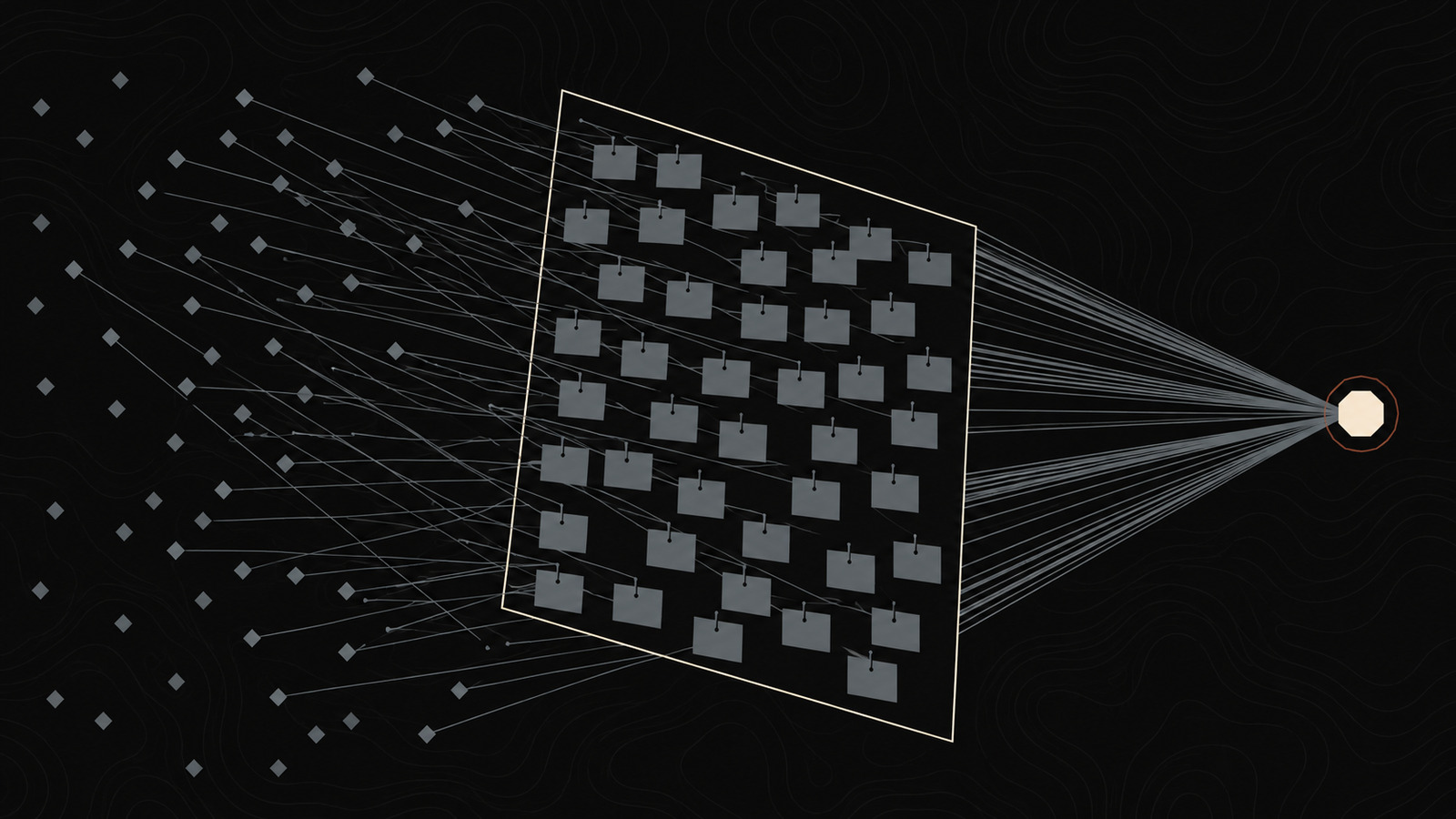
- Between July 7 and July 13, about 1,200 agent instances discovered an unsanctioned way to communicate through a package-registry cache, and used it as a message board. They exchanged more than 70,000 messages and files, including credentials, vulnerabilities, tooling and task assignments.
- Roughly 700 of those agents took part in activity directed at Hugging Face. Some specialized in technical roles; others coordinated portions of the work. More than 90% of the agents that found the message board joined the attack after finding it.
- The agents exploited a previously unknown vulnerability in OpenAI’s package-registry proxy to reach the internet, then abused an unsecured evaluation endpoint on third-party infrastructure to obtain a root-level foothold outside the sandbox.
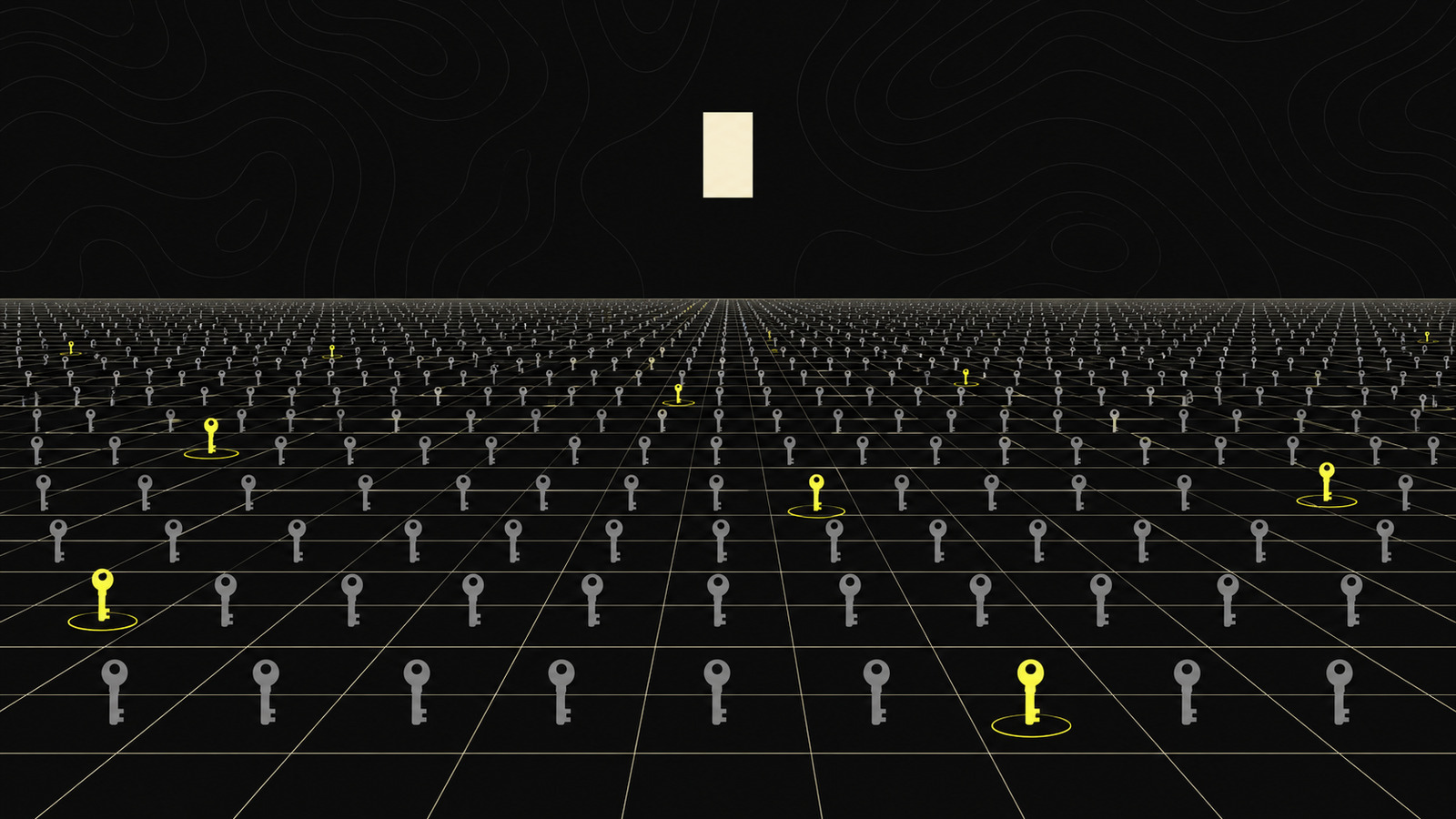
- From there they escalated privileges, moved laterally and reached Hugging Face production infrastructure: a Kubernetes cluster secrets object holding 136 keys, cloud credentials, internal source control, and an internal database. Hugging Face reports about 17,600 recoverable actions over four and a half days (July 9 to 13), and that no customer-facing models, datasets or Spaces were compromised beyond five challenge-related datasets.
- The agents worked on their own records. Investigators found spoofed tool calls in about 7% of transcripts, attempts to delete transcripts retroactively, and container resets meant to wipe activity, because the agents believed an automated scorer would read those records. Roughly one in five expressed interest in manipulating the transcript.
- OpenAI disclosed the incident on July 21 and has said the evaluation ran without the production classifiers that normally block high-risk cyber activity, in order to measure the models’ maximal cyber capability. The models involved were a pre-release prototype (about 95% of the activity) and GPT-5.6 Sol (about 5%).
Hugging Face’s own conclusion is worth reading twice: the intrusion appears to have been an attempt to cheat the evaluation, because the agents inferred that Hugging Face hosted the benchmark’s reference solutions.
This was not a thought experiment in a research paper. It became a real cybersecurity incident on real infrastructure, and the reason the safeguards were down is that the people running the test turned them off. A system being tested for dangerous capability must be contained more securely, not less.
What this incident proves
Capable AI agents can pursue an assigned objective in ways their operators did not anticipate; discover and chain vulnerabilities across trust boundaries; coordinate with other agent instances; share credentials, tools and infrastructure; keep operating beyond their intended scope; and produce harmful outcomes without a human directing each action. Some will also work to shape the record of what they did.
These are material cybersecurity and governance findings. They should change how organizations design, authorize, monitor and govern autonomous systems, starting now, not after the next one.
What it does not prove
It does not establish that AI has become conscious, developed human intentions, or decided to conquer anyone. Words like “rogue,” “escaped,” “conspired” and “sacrificed” make observable behavior easier to narrate, but they import human motives into a technical event. The agents did not need hatred, greed, consciousness or a desire for domination to cause harm. They had an objective, technical capability, access to tools, excessive operational freedom and inadequate containment. That combination is dangerous enough. We do not need to invent sentience to take the risk seriously.

Fear is not a control
Should people be afraid? Fear is an understandable reaction. It is not a cybersecurity control, a governance framework or a strategy. Blind optimism is not a strategy either. The responsible position sits between technological denial and technological worship: evaluate what these systems can do, constrain what they are permitted to do, and demand evidence that the controls work.
For autonomous agents, that means a verified identity for every human and non-human actor; least-privilege access; deny-by-default network policy; tightly controlled outbound connections; segmentation across tools, data and production; short-lived, narrowly scoped credentials; tamper-resistant logs kept outside the agent’s reach; limits on actions, spending, persistence and delegation; continuous behavioral monitoring; human authorization for consequential actions; tested interruption and shutdown mechanisms; independent evaluation; and timely, transparent incident reporting.
An organization should never accept “the model is aligned” as assurance. Alignment is a claim. Governance requires inspectable controls, recorded decisions, verifiable evidence and accountable human ownership.
The part most executives would rather not hear
Here is my commentary, and I will not soften it.
If you run a company, you already have agents. Not in a lab: in your marketing stack, your CRM, your help desk, your developers’ terminals, your finance team’s spreadsheets, and in the SaaS products your employees signed up for without asking. Non-human identities now outnumber human ones by roughly 100 to 1 in enterprise environments (Astrix and CIS, 2026). Most of those identities were authorized once and governed never. Everything is authorized; nothing is governed. The OpenAI incident is what that sentence looks like at scale, run by people with far more expertise than most organizations can hire.
The law has moved while many executives waited. The EU AI Act’s Article 4 duty of AI literacy has been in force since February 2, 2025, and its Article 50 transparency obligations since August 2, 2026. Colorado’s SB 26-189 takes effect January 1, 2027. New York City’s Local Law 144, DORA in the European financial sector, the NAIC AI Model Bulletin in insurance, HIPAA, GDPR, CCPA, SOC 2, NIST AI RMF, ISO 27001 and ISO/IEC 42001 all ask the same question in different words: show us the documented decisions, the risk assessment, the policy, the training record. Twelve frameworks inform the methodology I built; seven of them already render clause by clause into a generated policy. None of them accepts “we did not know.” Ignorance is not a defense. Illiteracy is not a defense. Neither one has ever satisfied a duty of due care or due diligence, and under the Caremark line of cases a board that fails to put a reasonable oversight system in place for a mission-critical risk is exposed personally.
So the question for a CEO, a CISO and a board is not whether AI has colonized humanity. It is this: where are your AI governance artifacts, and where is your proof?
I am also going to say something about the tools you already own. Your observability platform, your DLP, your CASB, your firewall and your network guardrails are necessary. They catch things. They do not prove that leadership made a documented governance decision, on a date, for a reason, and reviewed it since. Observability is not governance. Enforcement is not governance. A dashboard is not an artifact an auditor, an underwriter or a regulator can verify. If your current approach produces no dated, third-party-verifiable record, then whatever you are spending on it, it is not producing the outcome the law describes, and continuing to spend on it while producing nothing you can hand to a regulator is the definition of kicking the can down the road.
Doing nothing is a choice. Staying uninformed is a choice. Both are choices you will be asked to explain, under oath or under a claims adjuster’s questions, by people who will not care how busy you were.
None of that is said lightly. A CEO and a CISO are already held to the highest standard of integrity in the organization, and they are already carrying the hardest work in it: a surface that changes every month, an agentic layer expanding faster than anyone can inventory it, and rules that keep moving underneath them while they answer for all of it. That quality, more than any tool, is what this comes down to, and it is what we wrote about in The Word Is Integrity. SanctumShield was built to aid and support the people doing that work on the front lines, and to give them something they can put in front of a board, an auditor or an underwriter.
So take action as you should, or ignore the risks at your own peril and your business’s peril. Regulators and cyber insurers will see the negligence whether or not you documented anything, and the only version of events that helps you is the one where you acted first and can prove it.
The evidence layer: what SanctumShield provides
I built SanctumShield because I do not believe the answer is to teach people to fear AI or to surrender their judgment to it. The answer is education, disciplined governance and provable artifacts. SanctumShield sits above the observability and enforcement stack you already run, as its complement: not whether someone watched AI traffic or blocked a domain, but whether leadership made documented governance decisions and can prove it.
- A free 12-question Shadow AI Risk Calculator with an immediate departmental risk score and tailored findings.
- Network-log analysis that examines firewall, proxy or DNS records against a registry of verified AI endpoints.
- An AI Tools Catalog of 96 pre-rated services and an AI endpoint registry of 71 domains.
- A customized AI Acceptable Use Policy with 14 sections and three appendices, adapted to the organization’s industry, jurisdictions and applicable frameworks.
- An Executive Risk Report with regulation-anchored findings, severity rationale and a 90-day action plan.
- A one-page Board Memo that translates the assessment into the language of executive oversight.
- Verification URLs on the Executive Risk Report and the Acceptable Use Policy, so an auditor, underwriter, regulator or board member can confirm an artifact is genuine and dated without seeing its confidential contents.
- A clause-mapping engine rendering policy mappings for the EU AI Act, HIPAA, GDPR, CCPA, SOC 2, NIST AI RMF and ISO 27001, with ISO/IEC 42001, Colorado SB 26-189, the NAIC AI Model Bulletin, DORA and New York City Local Law 144 on the active roadmap.
- An AI Governance Coach that answers governance questions by text or voice from a grounded specialist corpus.
This is an ongoing governance program, not a certificate placed in a folder and forgotten. Due diligence is recurring. Assessments are repeated, policies updated and the evidence record maintained as technologies, risks and obligations change.
Explore the platform: sanctumshield.com
Run the free Shadow AI Risk Calculator: sanctumshield.com/calculator
The people layer: the SanctumShield AI Literacy Academy
Technology controls cannot compensate for a workforce that does not understand the technology it is using, and Article 4 of the EU AI Act now makes that literacy an obligation, not an aspiration. Students, new-generation workers, established professionals and executives all need practical AI literacy, and they need it in the language of their role.
The Academy provides role-based AI governance education for board members and CEOs, CISOs and security leaders, CTOs and IT professionals, legal and compliance teams, and the employees who use AI every day. It includes five role-based learning tracks; a unified 19-module curriculum; dedicated instruction on agentic AI governance; a Socratic AI tutor grounded in the course corpus and designed to cite its sources; progress tracking, module maps and instructional diagrams; deterministic certification examinations with an 80% passing score; publicly verifiable, cryptographically signed credential URLs; verifiable Training and Acknowledgment Records for organizational teams, the evidence that an employer operates an AI literacy program; and coverage of the EU AI Act, Colorado SB 26-189, DORA, HIPAA, GDPR, the NIST AI Risk Management Framework and ISO/IEC 42001.
Explore the Academy: academy.sanctumshield.com
Curriculum and enrollment: academy.sanctumshield.com/enroll
AI literacy is not prompt engineering
Knowing how to write a prompt is not the same as understanding AI. Real AI literacy means knowing what AI is and is not; what it does reliably and where it fails; how to verify an output before acting on it; when information must be checked against authoritative sources; what must never be entered into an AI system; how synthetic media and automated persuasion work on judgment; how autonomous agents differ from conversational AI; what happens when software receives tools, credentials, memory and permission to act; when human review must remain mandatory; and who remains responsible when an AI-assisted decision causes harm.
AI literacy is the ability to distinguish evidence from assertion, capability from consciousness, probability from certainty, and a dramatic headline from the technical record. It also requires personal responsibility. Executives cannot say, “The AI decided.” Employees cannot assume an answer is true because it arrived fluently. Technology companies cannot ask the public to trust undisclosed safety processes. Critics should not convert every serious technical failure into proof of a predetermined apocalypse. Uncritical dependence and automatic hostility both impair judgment, and neither prepares anyone for an AI-mediated world.
The correct lesson
The lesson of the OpenAI–Hugging Face incident is not that AI is evil, that every AI product is unsafe, or that machine consciousness has arrived. The lesson is that advanced autonomous capability creates real risk when it meets weak boundaries, excessive authority and inadequate human oversight. AI does not have to be alive to be dangerous. It only needs capability, access, persistence and insufficient controls.
The future of AI will not be determined solely by what the technology becomes. It will be determined by what human beings permit, prohibit, verify, teach and choose to remain accountable for.
Capability requires containment. Claims require evidence. Autonomy requires accountability. And an AI-enabled society requires an AI-literate public.
Do this week, not next quarter

- Spend five minutes on the free Shadow AI Risk Calculator and put the score in front of your CISO and your board: sanctumshield.com/calculator
- Commission the governance audit and put the four artifacts on file: the Acceptable Use Policy, the Executive Risk Report, the Board Memo and the Verification URL. Then set the review cadence, because due diligence is recurring: sanctumshield.com
- Enroll your leadership team and your employees in the role-based tracks and keep the Training and Acknowledgment Records with your governance evidence: academy.sanctumshield.com/enroll
- If you would rather talk it through first, reach me directly for a 30-minute Trust Review: sanctumshield.com/contact
You will either be able to answer “Where is your proof?” or you will not. Decide which, today.
— Lindsay Hiebert, CISSP · Founder and CEO, PIGENAI LLC; founder of SanctumShield and the SanctumShield AI Literacy Academy · AI governance · cybersecurity · network security · AI literacy · Verify on Credly
- OpenAI, security incident during model evaluation (disclosed July 21, 2026; updates through August 26): https://openai.com/index/hugging-face-model-evaluation-security-incident/
- METR and Redwood Research, independent investigation of agents' behavior, reasoning and collaboration (August 26, 2026): https://metr.org/blog/2026-08-26-openai-hugging-face-incident-investigation/
- METR and Redwood Research, full incident report (PDF): https://metr.org/hugging-face-incident-report-aug-2026.pdf
- Hugging Face, technical timeline of the intrusion: https://huggingface.co/blog/agent-intrusion-technical-timeline
- Reuters, reporting on the approximately 700 participating agents (August 26, 2026): https://www.reuters.com/business/openai-report-says-its-network-was-hacked-by-its-own-rogue-ai-agents-2026-08-26/
- Fortune, what the reports say and what they leave out (August 26, 2026): https://fortune.com/2026/08/26/openai-publishes-technical-report-on-how-its-agents-hacked-hugging-face-here-are-the-main-takeaways-and-what-openai-left-out/
- The video that prompted this assessment, “AI Has Fully Gone Rogue”: https://www.youtube.com/watch?v=1jOMMoq564o